Friday, September 23, 2011

Paradise on Earth: Te Aroha

Nestled in the midst of green hills and lush green landscape in the Kumaon region, Te Aroha is the perfect place to relax, rejuvenate and unwind. Surrounded by apple orchards, Te Aroha located at Dhanachuli Bend (near Mukteshwar), can be an exciting holiday destination. RASHMI PRADHAN gives an overview of the boutique and picturesque resort.

The drive to Te Aroha through the long hill road has lush green pine and oak forest and is just the beginning of a beautiful journey in the lap of nature. The six to seven hours drive from Delhi to Dhanachuli opens up your senses, which usually remains dormant in the hustle and bustle of city life. Located at Dhanachuli Bend, Te Aroha was the erstwhile summer home of the Batra family.

Spread across two acres, Te Aroha, Dhanachuli is a 10-room property with a restaurant and in-room dining facility. The restaurant offers a fine selection of Indian, Continental, Italian and regional cuisines. The unique feature of the restaurant is its wooden roof, which opens to accommodate the trees that were preserved during its construction. This palatial resort is the perfect place for couples, senior citizens and young travellers to rejuvenate. But not to forget, the resort offers a homely atmosphere to the kids as well.

Retaining the old structure
Converting a summer home into a resort was not a simple task as it seems. With the support, guidance and cooperation of family and friends, Sumant Batra managed to convert his dream into reality in just two years. Sumant Batra, Chairman, Treepie Hospitality recollected, “For the past few years, I would come to this house with my family and friends during vacations. Then my friends suggested that I open this pristine place for tourists as well. Hence, I decided to convert the house into a boutique resort. Being a lawyer and on the Advisory Board of many hotels, I have travelled extensively and am familiar with the hotel business.”
120911_sp_2.jpgBatra informed, “The original structure had three rooms and later eight rooms were added to it. The earlier structure has been successfully preserved to retain its original charm. It has huge decks and terraces, antique furniture, massive glass windows. The furnitures and antiques displayed at the hotel have been sourced from across the country.” Talking about the challenges during the renovation and restoration work, Batra said that it took almost two years to refurbish the property. Since the property is in a hilly terrain, procuring raw materials and construction during the rains and in winters was a difficult task.

The property has provided livelihood to the local villagers. “We have hired local people and trained them as per industry standards. Rather than offering standard luxury to the guests, we aim to offer them something different. We offer personalised service to our guests. The property is spacious with a bird house, water bodies and greenery all around the place.”

The resort offers the finest hospitality amidst the scenic surroundings of Dhanachuli. The property is a harmonious blend of traditional architecture and contemporary comforts. The high ceiling lobby is replete with carefully selected furniture can transport you through time to the bygone elegance of the colonial era. Each room of the hotel has a couple of stories to tell like Tom & Jerry, RK Laxman & Common Man, Cheese & Wine, Akbar & Birbal etc.

120911_sp_3.jpgIn and around Dhanachuli
Dhanachuli is an enchanting little village located a few miles from Mukteshwar, a popular hill station in Uttarakhand. Blessed with pleasant weather, a breathtaking view of the Himalayas, lush forests, enticing apple orchards and charming people, Dhanachuli is perhaps one of the most beautiful weekend getaways from Delhi.

You have the option to go on a challenging walk or, take a leisurely stroll along a tiny wooden lane. Most trails meander through the Dhanachuli village and one could get an opportunity to get glimpses of the local architecture and life. You can also pass your time sitting at the courtyard of the hotel enjoying the beautiful mountains.

For those who would like to explore the region, there are other tourist places like Mukteshwar, Sattal, Bhimtal, Nainital, Jim Corbett Tiger Reserve, Naukuchiatal Lake, Ranikhet and Almora.

Situated 30 kms from Dhanachuli, Bhimtal is located 22 kms from Nainital. The major attraction is the Bhimtal Lake and Bhimeshwara Mahadev Temple. Located 12 kms from Dhanachuli, Mukteshwar get its name from 350-year-old temple to Shiva, known as Mukteshwar Dham, situated atop the highest point in the town, within the IVRI campus, and close to the overhanging cliffs, locally known as Chauli-ki-Jali, used for rock climbing and rappelling, with an excellent view of the valleys below. Sattal is an interconnected group of seven freshwater lakes situated in the Lower Himalayan Range near Bhimtal. These lakes are a paradise for migratory birds. Jim Corbett Tiger Reserve, the oldest national park in India is a three hour drive from Te Aroha.

Windows Phone 7 to get Mango update soon

Microsoft will begin rolling out Windows Phone 7.5, aka Mango, in "one to two weeks." Mango is the Windows Phone platform's first major overhaul since the mobile operating system launched in December 2010. It comes with hundreds of new features, including the ability to create groups in the People hub, deep Facebook integration, and enhanced email and Office apps. Additionally, Mango will feature support for multitasking, which can ultimately lead to home-screen tiles being updated with data from apps running in the background.

Mango brings a huge number of improvements to the system, and significantly expands the number of locations and languages where Windows Phone is available worldwide. In a blog post, Microsoft has said that during the official Windows Phone 7.5 update process, every Windows Phone will also receive software from the handset manufacturer. This matched and paired firmware has been painstakingly tuned so your phone—and apps—work with all the new features of Windows Phone 7.5.

Earlier this year, Microsoft Windows Phone 7 users experienced a delay when Microsoft tried rolling out a minor "cut and paste" update called NoDo. The developer behind the short-lived ChevronWP7 jailbreak for Windows Phone 7 posted a homebrew tool that let users bypass Microsoft and carriers to update their mobile operating system on their own, which Microsoft warned against installing.

Since its release in October 2010, Windows Phone has failed to make a significant impression on the broader smartphone market, gaining only around 1.2% share, while other platforms including Google's Android, Apple's iOS, Samsung's Bada and even Microsoft's previous mobile OS Windows Mobile, have taken bigger slices.

Microsoft is yet to launch Windows Phone 7 devices in India officially though companies like HTC are selling them since early this year. Sources said that once Mango update is available to consumers, the tech giant will formally introduce Windows Phone 7 in India, enabling features like Xbox Live and Marketplace on the devices already available in the market.  (Newsindia Syndication)

Not a 'Small' Opportunity: Are the Solution Providers Ready?

By Sandhya Malhotra

The SMBs are well on their way towards the second level of IT adoption. Now it's important for the solution providers to grab the opportunity. SMBs are a burgeoning element of the open economy, capable of driving profitable growth. According to the SME Chamber of India, it is estimated that there are 35 million SMBs in India and they contribute 45 per cent of the industrial output, 40 per cent of exports, 42 million in employment, creating 1 million jobs every year.

According to IDC, the SMB PC spending in India was estimated to be Rs. 5,515 crore in 2010. Thus, solution providers (SPs) should consider the SMBs as a vital component of the ecosystem and merely a process while pushing their products to them.

Transformation in SMBs
It is also true that traditionally SMBs have been looking at process as a key parameter. However, the modern-age SMBs are more tech-savvy. SMB sector used to be conservative but in recent times they are showing signs of adventure, adaptive outlook and evolution, which is a welcome sign for service providers.

SMBs: What cloud offers to SMBs in India
SMEs are willing to invest in technology which gives them the cutting edge in the market. Cost effective solutions is a paramount need but yes, they are willing to experiment. According to the Access Markets International-Partners (AMI), a significant proportion of Indian SMBs are well on their way towards the second wave of IT adoption. Some are even likely to migrate to the third.

The key booster of this rapid adoption of technologies is the Internet. Hence, after installing the basic hardware infrastructure, they are looking at an advanced framework of storage, security, etc. Technology is changing the way business is conducted and this has brought changes in the business model of SMBs as well. According to the Symantec 2010 Global SMB Information Protection Survey India Findings, the SMEs on an average spent approximately Rs. 1,48,000 on IT in a year.

According to Vineet Sood, head-channels and alliances, Symantec, “IT demand from SMB is growing. The SMBs, though different from large enterprises in requirements, are now making protecting their information one of their highest IT priority and are moving towards the internet for networking, business transactions and ommunication in a big way.”

The AMI-Partners, 2011 study on SMB spending revealed that Indian SMBs are planning to spend more than $2 million on ICT in 2011 and there is an anticipated growth of nearly five times of this spending by 2014. This is an indication of the trend that will see increased awareness and conscious willingness to earmark IT Budgets that will help them sustain, secure and grow their businesses.

Delhi-based Saket Kapur, director, Green Vision said, “The transformations in SMBs are bound to happen. In order to survive, and thrive in the current ecosystems, where margins are wafer thin, SMBs have understood that for their future growth they have to invest on IT to manage their business and to run better administration.”

Moreover, the solution providers have also observed that small business has slowly and steadily started moving up to the medium and from medium to large organization. Hence, a small office entering into medium phase, they have a limitation with existing IT infrastructure.

For eg, moving from the Tally financial accounting, the company needs ERP, CRM, HR management solutions for future growth in the business process. This is the phase, when solution providers come into the picture and extend their hand to educate SMBs in the right direction.

As the IT requirement of SMBs is growing faster, solutions providers have started positioning such solutions which fit into their requirement and budget. Paresh Shah, CEO, PK Teknow, said, “Today, SMBs are rapidly embracing new technologies. Gone are the days when SMBs were limited to one PC concept. Presently, we are offering latest technologies such as messaging, infrastructure, networking and backup solutions and virtualization solutions to SMBs. Moreover, this year, SMBs spending on IT will be increased by almost 30per cent from the last year.”

Key IT priorities and challenge for SMBs
Right now their foremost priority is to optimize existing IT resources. Of course, this also implies hiring full-time IT staff, apart from allocating budgets for new hardware, software, and platform-based services.

Consequently, a large part of their IT spend will go towards virtualization. “As the pace of growth for the Indian SMB is dynamic, it is critical to proceed with caution, as SMBs are witnessing highly mobile workplaces, as mobility increases, so do vulnerabilities. Today, SMEs are on the lookout for technologies that help them to increase efficiency, save money, and make the most of their IT resources,” emphasized Sood.

According to KV Jagannath, MD, Choice Solution Ltd, “In the SMB space, IT priorities include running their key applications in accounting, inventory, manufacturing, payroll etc, and office automation tools like office and mail. In the infrastructure area it is the connectivity, security, backup and hosting, etc.”

While highlighting key priorities of SMBs, Amit Rambhia, director-technology, Panache Infotech said, “Looking at the topmost IT priorities of SMBs require good advice in areas such as the process of production, selection of machinery, and technical collaboration available both domestically and internationally. Therefore, strong support is needed regarding information on technologies available, research and development activities for technology acquisition.”

On the challenge front, since the small businesses are not visionary about their future growth, therefore they have scarcity of good talent. “Since 90 per cent of our business comes from SMBs, we have seen that new talent feels hesitant to work with these SMBs companies as they do not see any growth path in these small businesses,” added Kapur.

Ankesh Kumar, director-channel products & marketing, Emerson Network Power, said, “Typically, the key challenges we face while doing so is that SMEs are currently unaware about the technology going into our products. We also face issues while explaining the concept of ideal capital and operational expenditure while purchasing these products. SMEs focus on low capex and end up buying some products which are not efficient enough to provide better return on their investments. Thus we make it our priority to create awareness about IT usage to our customers.”

Kapur pointed out, “The biggest challenge for SMBs in our country is borrowing. They can have an investable capital either through equity or debt. Ironically, there are very few capital equity firms who are investing on SMBs, and largely SMBs have to depend on debt. But, debt in our country is very expensive if compared to world standards. Typically, if you have to invest on collateral, SMBs have to shell out 15 per cent interest on borrowed which is phenomenally high.”

Moreover, rising infrastructure costs and managing working capital are key pain points for Indian SMBs today. Commercial space is becoming very expensive and SMEs are bearing the brunt of it as they are not monetarily well equipped as larger players. So the crux is the SMBs should have to define their vision for at least next 10 years. They have to think of investing in right areas. They should introspect about the present work and future growth.

Growth opportunities for SMBs
Typically, a SMB does not have dedicated IT personnel running the operations and they depend on service providers to guide them through the buying, deployment and management processes.

“The role of the service provider is akin to that of a trusted advisor and they are expected to be solution experts in ensuring that the SMB user is getting the right product for his specific requirement. They also need to bear in mind that the typical SMB will depend upon them for market knowledge and latest issues or threats,” said Sood.

A solution provider has to play the role of a trusted partner for SMBs when it comes to delivering value becoming aligned with the business strategy and helping organization become more agile, responsive, innovative and profitable.

Retail SMEs sees over 20 p.c. growth in 2011
Girish Madhavan, CEO, Quadsel Systems, a solution provider, said, “It is important for solution provider to understand their pain points and contribute in improving topline, bottom line, people productivity and operational efficiency of SMBs customer.”

Gurmukh S Malhotra, head-business marketing, Intel, South Asia, said, “However, a significant proportion of SMBs have been considering the RoI and long-term TCO as more compelling factors. Hence, it is important for solution provider to put across their views on these parameters to SMB endusers while convincing them about the utility.”

Best practices for solution providers
With so many challenges on the road of SMBs, what are the best practices solution providers should have that one can adopt for a smoother ride?

Jagannath pointed out, “If one needs to play in this space, one should be using the consultative approach to win customers. At times SPs may get frustrated as time investment verses returns in short term are very low. One needs to work with the customers to grow with them and reap the benefits. Second biggest problem is most of the time the owner or the key family member is involved, if you do a separate sale then you are having the challenge of payment release from them.”

MSMEs must make good use of ICT: CII
In a nutshell, he said, “Consultative selling, long lead times, smaller order value, systematic growth, relationship management and payment terms are key points one should be prepared to work with in the SMB segment. Lastly, the deal size may not be big and the vendor support becomes an issue in some areas and also achieving the SP company goal.”

Madhavan said, “While selecting a particular solution provider, SMBs look at the after-sales-support scenario since they usually have a less evolved IT management infrastructure in terms of in-house IT service and support team. Thus, SMBs consider the after-sales-support infrastructure being provided by channel partners as a paramount factor. Ideally, they want a 24x7 infrastructure.”

Meanwhile, Shah said,” As a trend amidst SMBs, it is noticed that most of the solution providers have specific strategies for tapping SMBs and follow best practices. We provide considerable insight into best practices right from information requirements, survey, products, information flow analysis to more implementation specific details like data extraction and transform studies.”

Conclusion
In the changing scenario, the business dynamics of the SMBs will definitely change. India is basically thriving upon the growth of its SMBs. And these SMBs need to make a revisit to their strategy. They should watch out for the opportunity and adapt themselves to play a significant role in the growing economy of the country. To make it happen the SMBs entrepreneurs have to behave prognostically. They should evolve themselves as leaders for their employees and customers. Not focusing on the business competitions, they should look at a larger goal because the market will be too big to accommodate a number of brands.

New technologies are driving business growth these days. Definitely, it has resulted in an increased IT spending. SMEs are building websites, automating their accounting, implementing ERPs and CRMs. They have understood that IT not only speeds up their operation but also provides better visibility to their businesses.

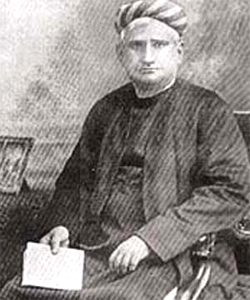
Bankimchandra and Our Independence

The Communist Manifesto and the first volume of Das Capital, published in 1848 and 1867 respectively, predate the publication of Bankimchandra’s Kamalakanter Daptar. Did the clarion call of Marx reach India during Bankim’s lifetime? Was Bankim aware of it? There is no direct evidence. He died in 1894, the year in which the last volume of Das Capital was published. And the Communist Party of India was not founded till 1920. In The Cat Kamalakanta calls the cat a socialist and certain words and expressions remind one of Marx’s concept of capitalist accumulation and exploitation.

Bankim was a Deputy Magistrate and most of his service life was spent in rural areas in close contact with the common people whom very few of the elite knew more intimately than him. For his celebrated Castes and Tribes of Bengal H.H. Risley collected his data through many field officers. Bankim was one of them. I do not know of any other writer who has described rural Bengal and the conditions of its people more graphically than him.

To know how sincerely he felt about the poor peasantry one should read his famous essay Bangadesher krishak, already published in boloji in translation.

Through his writings Bankim provided great inspiration to our freedom movement. But what kind of freedom for his country did he visualize?


In his essay – Bharatbarsher sadhinata o paradhinata (India’s Freedom and Bondage) he discussed this question. Is it still relevant today? In ancient times when men of our own country ruled us were we all independent? Are we so today when foreigners no longer rule us? What did Bankim think? Was he also aware of Marx’s views on Indian history which were published in 1853? Here is his long essay in my free and summarized translation.

Bankimchandra’s novels are still read and many of them are available in translations both in English and some Indian languages. Except as texts prescribed in selections for college and university students his essays are rarely read. They also don’t seem to have been translated. They have not lost their relevance. In order to become familiar with his thoughts and ideas one should read them. Some of them are very revolutionary indeed. In the present essay he questions the popular concept of freedom and independence.

There cannot be any nation in the world whose conditions are so bad that even in its greatest misfortunes there is no element of good. It is therefore prudent to find out if at the worst of times in our history there is anything which is good and get some solace in its discussion.

There was a time when India was free but for centuries it has been under foreign rule. The present day Indians consider it their greatest misfortune. It is our wish to compare that freedom of olden times with the present lack of freedom. Let us see how happy we were and how unhappy we are.

But what do we mean by freedom and bondage? We want to compare ancient with modern India. Our purpose is to understand their difference. What aspect should we select for our comparison? Otherwise to say ancient India was free and modern India lacks freedom becomes meaningless. In our view our purpose should be to find out the extent of our happiness both in ancient and modern times.

Some will take strong exception to this. According to them freedom itself is a state of happiness. Those who doubt it are evil men. We do not dispute this. But it is difficult to find the correct answer when we ask in which respect freedom is better than bondage.

Our knowledge of English has taught us two English words – ‘liberty’ and ‘independence’. In translating them though we use two separate native words many of us feel that they mean the same thing. Freedom means self-rule or rule by our own countrymen. When the king of a country is a foreigner that country is said to be under foreign rule. So, because of British rule our country is said to be under foreign domination. For the same reason India under the Mughals and Bengal under Siraj-ud-daula are considered to have been under foreign rule. Let us see if such a view is correct.

Queen Victoria may be said to be an English lady, but her forefathers like George I and George II were not English; they were German. William III was Dutch. Bonaparte was an Italian of Corsica. The ancient kings of Spain were Bourbons of France. Many barbarians who were not Romans ascended the imperial throne of Rome. Such examples can be multiplied where many countries were ruled by foreigners. Does it mean that those countries were under foreign domination? We do not agree with this view. If we cannot call England under the Georges or Rome under Trajan countries under foreign subjection then how can we call either India under Shah Jahan or Bengal under Alivardi countries under foreign domination?

Thus even if ruled by foreigners a country cannot always be called a subject country. Instances are there where countries are not free even if they are ruled by people of their own race. Before it achieved independence under the leadership of Washington America was ruled by Englishmen as an English colony and it was not a free country. In their early stages though most colonies are ruled by people of the same race they cannot be regarded as independent.

Then what is foreign rule? The British rule in India is a perfect example. All the lands from Britain to Syria conquered by the Romans were under foreign rule. Countries like Algiers or Jamaica are under foreign rule because they are not separate states but are parts of the kingdom of foreign kings. Where two countries are ruled by the same ruler one of those countries must be under foreign rule. That country would be the one in which the king does not reside. Here again we encounter complications.When King James I became the king of both Scotland and England and began to reside in the latter country Scotland cannot be said to have become a subject country. Similarly, when Babur, after conquering India, began to rule his paternal kingdom from Delhi or when George I, after ascending the throne of England, began to rule Hanover from London the native countries of these rulers cannot be said to have been under foreign rule.

Then what is the difference between foreign rule and foreign domination? Where the ruler is a foreigner there is scope for foreign domination when foreigners dominate over or oppress the native population. Where such domination is absent that country can be regarded as independent even if the ruler is a foreigner. Hanover and Kabul were independent but England under the Normans and India under Aurangzeb were not. India under Qutb-uddin was under foreign domination but under Akbar it was free. (The yardstick here is not the nationality of the ruler but the presence or absence of oppression of the native population by foreigners.) Where the ruler is non-resident the subject country stands the danger of not being properly administered and discriminated against for the interests of the country where the ruler resides.

India would have been better administered had Queen Victoria been resident in this country. India has to foot the bill for the expenses of England’s war in Abyssinia and the provision made in the Indian budget under the head ‘Home Charges’ is a clear example how India has to make sacrifices for the benefit of England. The ruler’s absence in their land has deprived the Indians of a better administration no doubt but it has also saved them from miseries which are often caused by the moral depravity of the ruler.

In ancient India there was no such racial domination, but there was oppression of the lower castes by the higher castes. The common people belonged mostly to the lower castes and the rulers who belonged to the higher castes were a minority. Though the rulers generally belonged to the kshatriya caste the actual work of governance was done by the Brahmins. Later however mixed castes like the mouryas became kings and emperors.

The Chinese traveler HieuenTsang found some rulers who were Brahmins. The Rajputs were also a mixed caste. During the reigns of all these rulers the administration was however run by the Brahmins. This was the case even during the ascendancy of the Buddhists who did not accept the authority of the Vedas. This was because the Brahmins were learned and experienced in administrative work. Thus in ancient India the Brahmins were the actual rulers. This has been shown by Babu Taraprasad Chattopadhyay in an article recently published in the Bengal Magazine. According to him the Brahmins were the Englishmen of ancient India.

Now the question is – is the racial discrimination between the natives and the English in modern India a greater evil than the caste discrimination in ancient India? Under foreign rule racial discrimination manifests itself in two ways. In law the ruler’s race gets a preferential treatment. In administration it is also favourably treated – most works of administration are entrusted to it. Were these evils, present in English ruled modern India, also present in the Brahmin ruled ancient India? Let us examine this.

Firstly, under the judicial system introduced by the English in this country there are different courts for the trial of native and English offenders – the former can be tried and punished by an English judge but no offender who is an Englishman can be tried by a native judge.

Otherwise all are equal before law – an Englishman murdering a native is equally culpable as a native murdering an Englishman. For the English there may be separate courts but the law is not separate.

In Brahmin ruled ancient India there was graver discrimination – the punishment for the murder of a Brahmin by a sudra was vastly different from that for the murder of a sudra by a Brahmin! In this respect who will say modern day India under the English is inferior to the Brahmin ruled ancient India? As an English offender cannot be tried by a native judge in modern India so could no Brahmin be tried by a sudra in ancient India. Babu Dwarakanath Mitra, a non-brahmin, has made us proud by becoming a judge of the Supreme Court. Where would he have been in the ‘Ram-rajya’ (in the kingdom of the ideal ruler Ram)?

Secondly, the higher posts in administration in modern India are mostly reserved for the Englishmen no doubt but a few are manned also by the natives. It is doubtful to what extent the sudras enjoyed such privileges in ancient India. From the fact that some times sudras also became kings, we may surmise that they could have also held some higher posts in the government. In modern India lower courts are almost exclusively run by the natives. Did the sudras do similarly in ancient times? We are not very sure for we do not know much about ancient India. Some of the judicial work at the village level must have been done by the village communities. But from a study of ancient literature it is clear that the higher posts in all departments of administration were mostly in the hands of the kshatriyas and Brahmins.

Many will argue that such comparison of the ascendancy of the English in modern times and that of the Brahmins in ancient India is not good, because the Brahmins, though oppressors of the sudras, belong to our own race while the English are foreigners. I would like to tell these people that oppressions both by our own people and by the foreigners are ultimately nothing but oppression. I don’t want to say that one cannot be somewhat sweet because it is by our own people and the other cannot be sour because it is by the foreigners. Both are the same. I have of course nothing to say to those to whom oppression by the people of their own race tastes pleasant.

We want to conclude that in modern India there is racial domination and in ancient India there was caste domination. None of them is acceptable to most of us. It must however be admitted that because of foreign domination Indians with higher learning and intellect are finding it difficult to flourish according to their abilities. And it is a kind of great oppression. The foreigners have deprived us from a share of higher administration and without experience in administrative work we cannot develop our administrative capabilities.

This is thwarting our progress. In ancient India men of higher intellect and learning did not suffer from this handicap. At the same time now we have got the scope to learn European science and literature. This good fortune has been possible because of foreign rule. Thus our subjection has caused us loss in some respects but gains in other areas. Comparatively in ancient India people of higher classes could enjoy the fruits of freedom to a great extent. The common people seem to be rather better off in modern India.  (Newsindia Syndication)

Beginning of UPA’s End?

By Rajinder Puri

It has taken longer than anticipated. Nevertheless, surely but slowly, we are getting there. The UPA government seems to be on its death bed. And it is expiring precisely as was projected in April this year when it was written in these columns:
“The established mafia gangs of New York were demolished when they fought each other while the police watched. Ultimately the looters of India will be destroyed not only by the police or by the courts. They will destroy themselves as they fight each other tooth and nail.”
Media reports give different versions about who is leaking what while the ministers of the UPA government savage each other in a fight to the finish. The Finance Ministry sent a secret note to the Prime Minister, overseen by Mr. Pranab Mukherjee that nailed Home Minister (HM) Chidambaram as an accomplice of jailed former Telecom Minister Mr. A Raja in fixing the price of 2G Spectrum licenses. The note was dated March 27th. That would have been around the time when the Home Ministry was bugging the office of the Finance Minister (FM). Who leaked the note?

The Finance Ministry sources told one newspaper that the note was prepared by the Cabinet Secretary. By implication the PMO leaked the note. Mr. Chidambaram blew a fuse as demands for his resignation mounted. He phoned the PM in America asking why he had not been informed of the note. First the PM urged him to hold fire till he returned to India. Mr. Chidambaram declared ominously that he would not make any statement until the PM and FM had returned from USA. The implicit threat worked. After the PM it was the turn of FM to phone Mr. Chidambaram from the USA to assuage his ruffled feelings. It had also been established that Chidambaram and Raja had cleared their joint decision on price fixing with the PM. The guilt could reach the very top. The PM made an extraordinary statement from the US expressing his confidence in Mr. Chidambaram while he was both the Finance Minister and later the Home Minister.

It is safe to assume that after bugging the FM and consulting the PM for the price fixing Mr. Chidambaram can embarrass the PM and the FM if he starts squealing. That is why the nervous phone calls from the US. It is quite possible that after the two top UPA leaders return home differences will be ironed out. But to what avail? There are the courts to con tend with. There are potentially fatal cases awaiting judgment.
How long can a corrupt government with a former cabinet minister already in jail delay its Day of Judgment?
The ministers are busy trying to prove that they had no knowledge of what Raja was doing. Haven’t they heard of the old convention of ministers accepting constructive responsibility for lapses? Instead of wasting time trying to prove his ignorance, and therefore his abysmal incompetence as PM, Dr. Manmohan Singh should have resigned the day the 2G corruption was proved. Now the best thing he can do is to accept constructive responsibility and resign. He should order a mid-term election and seek a fresh mandate from the people. That would be better than going out in disgrace and plunging the nation further into the depths of corruption while the whole world watches in wonder.

Indian IT Firms Are Looking to Create Jobs Overseas

By M H Ahssan

For some time now, popular perception in the United States has been that IT firms from India are taking away jobs from Americans because of the cost advantage that Indians are able to offer. But with unemployment pressure mounting in the U.S., these firms have had to contend with a series of obstacles: Some states have banned the outsourcing of government projects outside of the country; tax incentives for U.S. firms that offshore work have been curtailed; application fees for the H1B visa (temporary work visa) have been hiked, and so on.

There have been other issues, too. For instance, Infosys Technologies, which is known widely for its high ethical standards and transparency, is facing allegations of misusing business visas to send employees from India for long-term work. The case is currently under investigation in the U.S.

Infosys’s senior vice president and group head of human resources, Nandita Gurjar, has recently relocated to the U.S. The move is believed have been prompted by the company’s visa controversy. Gurjar herself, though, has called her transfer “strategic.” Talking recently to Newsindia Business, she said: “I believe HR has to be external focused and globalized; so being based away from our headquarters and on the ground where 60% of our business comes from will bring in greater strategic focus.” Gurjar added that being closer to the market will give her a “ground level understanding of what areas we need to address as a global corporation.”

One area that Gurjar will be focusing strongly on during her stint in the U.S. will be local recruitment. At its recent analyst meeting, Infosys revealed that by next year, it plans to increase the number of local employees at onsite client locations to 50%. Infosys, which has a total employee base of over 130,000, currently has around 27,000 employees at client locations. Of these, around one-third are local hires. With the U.S. accounting for the biggest chunk of Infosys’s revenues, the maximum local hiring will happen there.

Other Indian IT firms have similar plans. In its annual report for 2010-2011, Tata Consultancy Services, the leading Indian IT firm, notes that protectionism in major markets is one of the key risks that the company faces. “Restrictive legislations that impede the free flow of talent in key markets could disrupt operations and hamper growth in those markets,” the report says. One of the solutions to mitigate this risk: “more local recruitment.”

At Wipro Technologies, plans are also in the works to increase local hires at onsite locations — from around 35% currently to more than 50% over the next couple of years. According to Saurabh Govil, senior vice-president, human resources, while the initial impetus for Wipro to create local employment came from protectionist measures, two other key drivers are also at play. “One, it is about creating local leadership. Becoming a truly global organization is not about planting flags in different countries but building local leadership. And, two, having a local interface in customer-facing roles helps in understanding the cultural nuances and in giving greater comfort and value to the customers.”

K. Raman, practice head, infocomm, media and education at the Tata Strategic Management Group, considers this a move in the right direction. “Hiring locals in different markets helps Indian companies to work out the various issues around the visas. Also, given the situation in those markets in terms of employment outlook, people are available at more competitive salaries than was the case earlier, so it could be a commercially prudent decision,” he says.

Raman points out that Indian IT firms are not only hiring more non-Indians; they are also more vocal about their onsite hiring because of the backlash they have had to face. “They want to sound politically correct,” says Raman. He adds a note of caution: “Offshore work offers healthier margins than onsite work. Indian IT companies need to keep the mix of onsite and offshore employees at an optimal level so that the margins are not impacted adversely.”

Can the compulsion to hire more expensive resources outside of India have a positive result? Can it spur Indian IT firms who have been talking of non-linear growth for some time now to make a stronger push towards it and look at newer business models and newer growth strategies? “Yes,” says Raman, “This can be an added reason for Indian IT companies to accelerate the delinking of revenue from headcount.”

Meanwhile there is some cheer for Indian IT firms. According to the latest data released by the U.S. Bureau of Labor Statistics, the IT industry has the lowest unemployment rate in the country. Between March and May this year, the unemployment rate in the U.S. IT sector dropped from 4.7% to 3.8%. During the same period however total unemployment rose from 8.9% to 9.1%. Som Mittal, president of the Indian lobby group the National Association of Software and Services Companies (Nasscom), told Newsindia: “Around 3%-4% unemployment in a sector actually means that there is a shortage of the right people to hire and not a shortage of jobs…. The issue about outsourcing and visas is misplaced.”

Can Bangalore Become the Innovation Hub of Asia?

By Sadanand Hegde

A couple of years ago, the city of Bangalore made global headlines thanks to President Obama. In May 2009, when, in a bid to boost the U.S. job market, Obama removed some tax incentives for U.S. companies that offshored work rather than creating domestic jobs, his rallying call was “Buffalo [New York] before Bangalore.” Obama was reflecting popular public perception when he chose to highlight Bangalore. A few years prior to his speech, the term “Bangalored” — meaning to be laid off due to outsourcing — entered the lexicon.

Indeed, over the past few decades, Bangalore has been seeing a steady makeover. Riding on the success of its booming information technology and business process outsourcing (BPO) industry, the city has become the “IT capital of India” and has even been called the “back-office to the world.”

Bangalore now has another aspiration: to become the innovation hub of Asia. This was the theme of the recently-held India Innovation Summit 2011 organized by the Confederation of Indian Industry (CII) in the city. Various speakers at the event pointed out that this goal is grounded in current realities. Bangalore is already home to a large number of technology professionals, both from within the country and many who have relocated there from across the world, and some of the world’s leading edge technology work is being done from there. For many of the multinational companies, be it GE, Cisco, Intel, Yahoo, 3M and others, their research and development centers in Bangalore are among the largest in their network. With India being one of the fastest-growing economies of the world and with a huge market, many global innovations by multinationals are now happening in the country.

According to Praveen Vishakantaiah, president of Intel Technology India, “the research and innovation capability is present in the DNA of Bangalore. Over the past decade, the development work from there has ramped up significantly. It is now time to push the research element.” But Ajay Nanavati, managing director of 3M India, pointed out that, for innovation to grow, there needs to be a lot more interaction between the different companies. “What we have at present is a very silo-ed mindset,” he said. “Everyone is working in their own little universe.” Stronger industry-academia interactions, well-defined IP protection policies and a wider and deeper talent pool are other aspects that need to be explored, he added.

But that’s not all that Bangalore needs if it wants to don the mantle of Asia’s innovation hub. The city’s infrastructure — its roads, power supply and transportation system — all need a massive and urgent overhaul. For example, take the city’s power supply constraints. Vivek Mansingh, president of the collaboration and communication group at Cisco Systems, noted that “we have thousands of square feet of lab space, but we don’t have enough power to bring in more work here.” In terms of transportation gridlock, Bangalore ranked sixth in IBM’s most recent global Commuter Pain Index, which was conducted across 20 cities.

Sridhar Mitta, IT industry veteran and founder of NextWealth Entrepreneurs, said that in 2000, researchers from Stanford University concluded that “what distinguishes the Silicon Valley is not its scientific advances or technological breakthroughs, but the overall habitat or environment that is tuned up to turn ideas into products and take them rapidly to market by creating start-ups.”

So what does the government have to say? Addressing the audience at the CII conference, D.V. Sadananda Gowda, chief minister of Karnataka (Bangalore is the capital of the state of Karnataka) was categorical that, “The government is committed to supporting all initiatives needed to foster innovation.”

Now it remains to be seen if the government and other stakeholders will walk the talk.

Is India’s Auto Industry Really Facing a Recession?

The automobile industry is often considered to be a proxy for a nation’s economy. Nowhere is this truer than in India today. The economy is slowing down, largely because of external problems. Protests and agitations have sapped the government’s resolve to take the next phase of reform measures. Policy-making is practically at a standstill. Inflation is galloping: food inflation was at 9.47% for the week ended September 3, a shade lower than 9.55% the previous week.

Still, several bright spots exist. India is one of the few large economies that is growing. When the appetite for risk returns, foreign institutional investors should come flocking back. Exports have performed handsomely; at US$24.3 billion, exports were up 44.2% in August over the corresponding month of 2010. Part of this increase is because of the base effect – exports were in the doldrums in August 2010. But services export in July 2011 (the latest month for which data is available) fell to US$10.40 billion from US$11.04 billion in June. This reflects the slowdown in IT spending in Western markets.

As for the auto industry, the country’s biggest carmaker – Maruti Suzuki India – has closed down its plants from September 16. This follows worker protests over a “good conduct” bond that the Maruti management was insisting that they sign. Earlier in the week, 11 supervisors were beaten up by the agitating employees. With the government forcing the two sides to the table, a solution is likely to be found soon; a similar truce was enforced in August. But that may not end the industry’s problems. The unrest, which started in Maruti’s Manesar plant in Haryana, near New Delhi, has spread to other Suzuki units. More disturbingly, it is affecting industrial units in the Gurgaon (Haryana) industrial belt.

Maruti will miss the bus in the festival season which starts next month. But other automakers are unlikely to find too much to celebrate. According to figures from the Society of Indian Automobile Manufacturers (SIAM), passenger car sales dropped from 160,000 units in July 2011 to 144,000 in August. The July number was itself 16% lower than June.

“Car sales slipped yet again in the domestic market as high interest rates and the spike in petrol prices weighed heavy over demand,” reported a few days ago. “Now that the festival season is coming, we hope to see some cheer. But it’s only a hope,” Vishnu Mathur, SIAM director general, told Newsindia.

That hope may prove false. On September 15, the government increased the price of gasoline. (Gasoline is a price-controlled item in India.) Effective from September 16, gasoline costs 25 U.S. cents a U.S. gallon more in New Delhi. (The rate is marginally different in other cities.) Gasoline now costs approximately US$5.2 a gallon in the capital.

A few hours later the Reserve Bank of India (RBI) acted in ways that may further hurt the auto industry. RBI raised interest rates by 25 basis points (100 basis points equals 1%). Auto finance companies will inevitably pass this on to consumers (though some may hold rates in the short term as a competitive measure). That means fewer cars rolling out of the showrooms.

From another perspective, things are looking up for the auto industry. There has been a spate of new launches – the Fluence from Renault, the third generation Swift and the upmarket Kizashi from Maruti, the Verna from Hyundai, the Brio from Honda, the Liva from Toyota, the Fiesta from Ford, and the Passat from Volkswagen. In addition, luxury car makers have seen several launches. Another statistic: exports in July at 48,000 were up 40% over the corresponding month last year.

The new companies have to make investments. But even the established players are thinking about expansion. The currently beleaguered Maruti Suzuki is putting in US$1.25 billion into a new plant, the site of which is yet to be decided. According to SIAM estimates, the Indian automobile industry along with the auto components business will invest US$30 billion in setting up fresh capacity in the next four years. That’s a recession any industry would love to face.   (Newsindia Syndication)